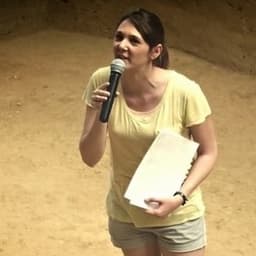
Élisa Caron-Laviolette is a postdoctoral researcher in archaeology at the TEMPS lab (Nanterre, France), specialising in the spatial analysis of prehistoric domestic spaces. Her work combines field recording, GIS, and other digital and computational tools to investigate the organisation and use of space in hunter-gatherer campsites, with particular attention to material culture such as stone tools. She also engages with comparative perspectives, including occasional studies of sedentary groups. is a postdoctoral researcher in archaeology at the TEMPS lab (Nanterre, France), specialising in the spatial analysis of prehistoric domestic spaces. Her work combines field recording, GIS, and other digital and computational tools to investigate the organisation and use of space in hunter-gatherer campsites, with particular attention to material culture such as stone tools. She also engages with comparative perspectives, including occasional studies of sedentary groups.