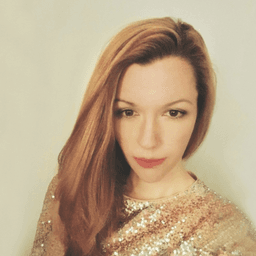
Katrín Lísa L. Mikaelsdóttir
Katrín Lísa L. Mikaelsdóttir holds a Ph.D. in Icelandic Linguistics from the University of Iceland. She currently works as an Adjunct professor in Medieval Icelandic Studies at the University of Iceland and as a project manager at the Centre for Digital Humanities and Arts in Reykjavík. She is also involved in several European training and research networks, including the Erasmus+ KA2-funded network ANTIDOTE – Advanced Training in Digitization of Older Texts, SCOOP – Source Codes of the Past: An international network for Automated Text Recognition, and is an organizer of the annual Winter School “HTR of Historical Sources”. Her main research areas include historical linguistics, statistical analysis and data visualization, and advances in Automated Text Recognition.

Resources
- ENLarge Language Models have the potential to transform scanned art catalogues into structured digital resources. This presentation by Arnoud Wils uses the Corpus Rubenianum as a case study to showcase how AI can extract bibliographic references, artwork provenance data and iconographic details from unstructured, PDFs.
UI and UX Design for Digital Humanities
ENThe design of a digital tool, such as a database or dictionary, does more than simply provide access to information; it also guides interpretation. This resource explores this dynamic through the lens of user experience (UX). The first part will review several practical methods for improving the usability of scholarly digital resources. The second part will adopt a more critical perspective, asking how interface design itself can be understood as a form of scholarly argument that influences research outcomes. Finally, the talk seeks to connect the practical work of building digital tools with a necessary critical reflection on their impact.Variability, Iterability, Re-presentation: Time Based Media Art and Archival Research at the National Gallery of Iceland
ENSince the turn of the last century, conservators specialising in time‑based media have grappled with the many practical, ideological, and ethical questions raised by the nature of technological development. This presentation from Sigríður Regína Sigurþórsdóttir introduces the fundamental concepts of time-based media conservation and discusses the challenges of preserving such media amidst rapid technological change.Preserving Color Fidelity in Digitized Masterpieces
ENSigurður Gunnarsson, photographer at the National Gallery of Iceland, shares the behind-the-scenes challenges of capturing artworks through photography, and how those challenges are solved. He talks about creating faithful digital reproductions, getting colors just right, and the trusted methods and standards professionals use to make sure the artwork looks as true to life as possible.Measuring Language Diversity with Digital Methods
ENUnderstanding how languages vary in the way they build expressions is essential for studying texts across periods and languages, yet traditional descriptions capture only a fraction of this diversity. Patternization is an approach that combines traditional text analysis and corpus linguistics with mathematical methods into a Python tool that allows us to explore such syntactic variation: it treats phrases as sequences of category labels and compares the patterns that actually appear with the full range of patterns that could appear. This task is hardly feasible if performed manually, illustrating how digital methods can reveal nuances otherwise invisible to the human eye.Identity Formation and Techno-Skepticism in the Digital Vernacular
ENDebates about generative artificial intelligence often frame it as a threat to human creativity. This presentation from Timothy Liam Waters argues instead that AI extends a longer history of hybrid vernacular expression in digital culture.Effective Design and Ethical Data Visualization
ENWhat makes information presentation “good,” and why does it matter? In this talk, Katrín Lísa L. Mikaelsdóttir argues that responsible data visualization is a humanistic practice requiring interpretation, not merely technical skill, exploring how choices of form, scale, hierarchy, colour and narrative shape what viewers understand, remember or overlook.Co-Curating Digital Museum Collections with Local Communities
ENLocal voices can play an important role in the interpretation and communication of museum collections, especially in the Arctic where Indigenous knowledge brings invaluable perspectives to our shared understanding of the past. This talk by Alice Watterson discusses case studies from digital outreach projects in Nunavut, Alaska and Greenland.