
Digital Humanities Research Questions and Methods



This module is dedicated to developing research questions in the Digital Humanities (DH), especially on finding, working with, and contributing data to digital collections and using digital Research Infrastructures (RIs). It will show examples of how DH and eHeritage approaches in cooperation with relevant RIs can lead to innovative research questions and methods.
The target audiences of this module are Digital Humanities and Cultural Heritage (CH) researchers and practitioners who wish to learn how to best benefit from and work with digital collections using digital RIs. The module is also suitable for computer scientists and researchers/practitioners in data centres who want to gain insight into more humanities & cultural heritage related aspects of digital research infrastructures.
Format of this Module
This module is broken down into specific research areas with case studies to illustrate the methods and tools used within those research areas. The sections were written by different authors, and the full credits for each section can be found at the beginning of that section where provided.
Learning Outcomes
By the end of this module, you should be able to…
- Have an overview of relevant Research Infrastructures, especially their collections and research communities and how to connect with and through them
- Understand how Digital Humanities and eHeritage collections and Research Infrastructures can be employed in the initial research design
- Be aware of methodological opportunities and challenges related to specific data types
General Introduction to Research Questions and Methods
This introduction was written and edited by Marie Annisius, Nadja Baldszuhn, Darja Fišer, Jakob Lenardič, and Ulrike Wuttke.
In the past few decades, humanities scholars have transitioned from data scarcity to data flooding. Increasing volumes of research data available in digital form have had two major consequences. First, they have enabled researchers to start using robust, verifiable and reproducible quantitative, automated approaches, techniques and methods, originally developed in data science and natural language processing, to process, visualize and combine research data. Second, these interdisciplinary approaches have enabled scholars to conduct humanities research on a much larger scale, sparking entirely novel research questions, which fill gaps, shed new light, give new insights or completely transform humanities research.
However, before the interdisciplinary approaches can be successfully employed, the available resources, tools and research techniques need to be well understood. This is the aim of this training module, which demonstrates data formatting, corpus encoding and corpus annotation for different types of specialized discourse as well as showcases corpus querying, visualization and interpretation in order to tackle research questions in the same dataset from a broad range of research disciplines in the humanities. Close attention is paid to distinguishing between the research data and metadata that were harvested from the source, and their enrichments obtained from DH tools.
The module also raises awareness of the different specific societal, institutional and technological circumstances that shape the content, structure and language of a particular type of specialized discourse as well as highlights the importance, potential, peculiarities and implications that these factors have for research in different DH disciplines. The module also presents the support offered by Research Infrastructures to scholars interested in this type of research in terms of the available resources, tools and case studies that help novice and experienced researchers alike better identify relevant research questions and understand the main quantitative research methods used to study specialized discourse from a broad range of DH disciplines.
Collections of Parliamentary Records
This ‘Collections of Parliamentary Records’ section was written by Darja Fišer, Jakob Lenardič, and edited by Marie Annisius, Nadja Baldszuhn, and Ulrike Wuttke. Note names are listed in alphabetical order and do not indicate level of contribution.
Parliamentary Proceedings in the Digital Age
The parliament is the most important political institution in a democratic society. In parliamentary democracies, parliaments serve as the centre stage for law-making and overseeing the government by democratically elected members. This is why journalists, members of the civil society, and humanities and social sciences scholars have always paid close attention to the debates conducted in parliaments.
Recently, through Freedom of Information Acts, a growing number of countries have started providing free and transparent access to parliamentary proceedings, often in common formats such as PDF and HTML. This enables informed participation by the public, improves effective functioning of democratic systems and also makes the datasets more readily available for researchers with heterogeneous backgrounds to look into the characteristics of parliamentary institutions, detect policy changes, conduct diachronic and transnational comparative analyses, etc. Among the latest hot research topics are issues such as the societal paradigm shifts that lead to political polarisations and the emergence of popular and populist movements.
For more details on this, see Working with Parliamentary Corpora .
The Importance of Parliamentary Debates for Cross-Disciplinary Research
Parliamentary discourse is governed by strict rules and conventions and is therefore characterized by specific institutional discursive features. Furthermore, parliamentary speeches are motivated by a wide range of communicative goals, such as position-claiming, persuasion, negotiation, agenda-setting and opinion-building, which follow a specific ideology or party line. As such, parliamentary discourse is heavily characterized by role-based commitments and confrontation and the constant awareness of a multi-layered audience.
Due to their unique content, structure and language, records of parliamentary sessions have always been an important resource for a wide range of research questions from a number of disciplines, such as political science, communication studies, and history, but also in applied linguistics, such as discourse analysis, sociolinguistics, and multilinguality. While parliamentary discourse has been a major research topic in various fields for several decades, it has only recently started to acquire a truly interdisciplinary scope. The technological and methodological developments have enabled cross-fertilization of the relevant disciplines and comprehensive exploration of various socio-political research questions by investigating this highly specific kind of language data.
With an increasingly decisive role of parliaments and their rapidly changing institutional relations with the public, the mass media, the executive branch and international organizations, further empirical research and development of integrative analytical tools is needed in order to achieve a better understanding of the commonalities and specificities of parliamentary discourse as well as its wider societal impact, in particular with studies that represent diverse parts of society (women, minorities, marginalized groups) and cross-cultural studies.
For more details on this, see Boosting Digital Humanities Research with Parliamentary Data .
Parliamentary Proceedings and Research Infrastructures
The good availability of parliamentary proceedings in digitized form and granted access rights to public information in the EU countries have motivated a number of national as well as international initiatives to compile, process and analyse parliamentary corpora. They are available for most countries within the CLARIN ERIC research infrastructure for language resources and technology, with the UK’s Hansard Corpus being the largest (1.6 billion tokens) and spanning the longest time period (1803-2005) while corpora from other countries are significantly smaller (most comprise between 10 and 100 million tokens) and cover shorter periods (mostly from the 1970s onwards). Most of these corpora can be directly downloaded from the national CLARIN repositories or queried through online search environments. They are also richly annotated and available under open licences.
For more details on this, see Parliamentary Corpora in CLARIN Resource Families.
Working with Parliamentary Corpora
Parliamentary Proceedings as a Research Dataset
Parliamentary proceedings have some important characteristics that researchers need to take into account throughout their work. Their most distinguishing characteristic is that they are essentially transcriptions of spoken language produced in highly controlled and regulated settings. They are also rich in invaluable (sociodemographic) metadata. To enable data-driven science, parliamentary data must be easily findable and accessible, encoded according to international standards and recommendation, with rich and correct annotations and metadata.
Encoding of Parliamentary Data
For the encoding of parliamentary data, the format, quality and structure of the source files are essential.
Source Files
Most frequently, transcriptions of parliamentary proceedings are made available in HTML or PDF formats. These formats are appropriate for reading by humans but are not appropriate for direct processing by computers. For this purpose, a much better, i.e. more explicit format, is XML. Therefore documents stored in HTML and PDF need to be converted to XML, a process which can range from trivial to highly complex.
Traditionally, only transcriptions of parliamentary sessions have been made available but they are now being increasingly released in audio and video as well.
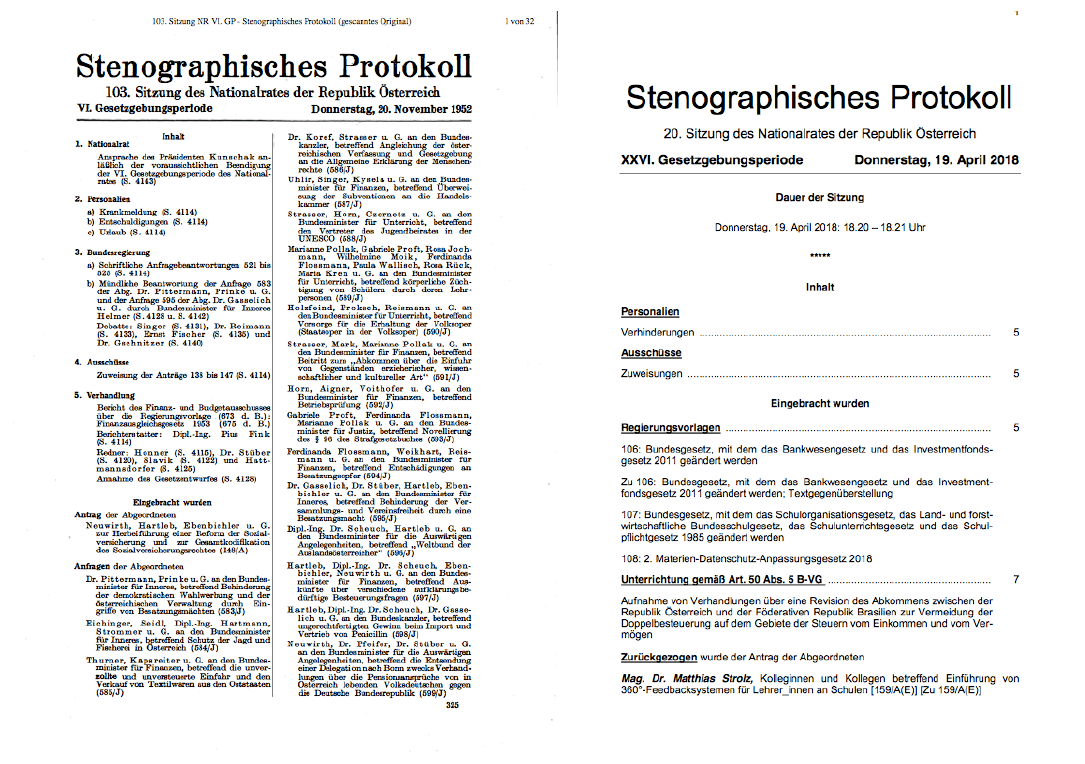
Figure 1. Proceedings of the Austrian parliament in PDF.
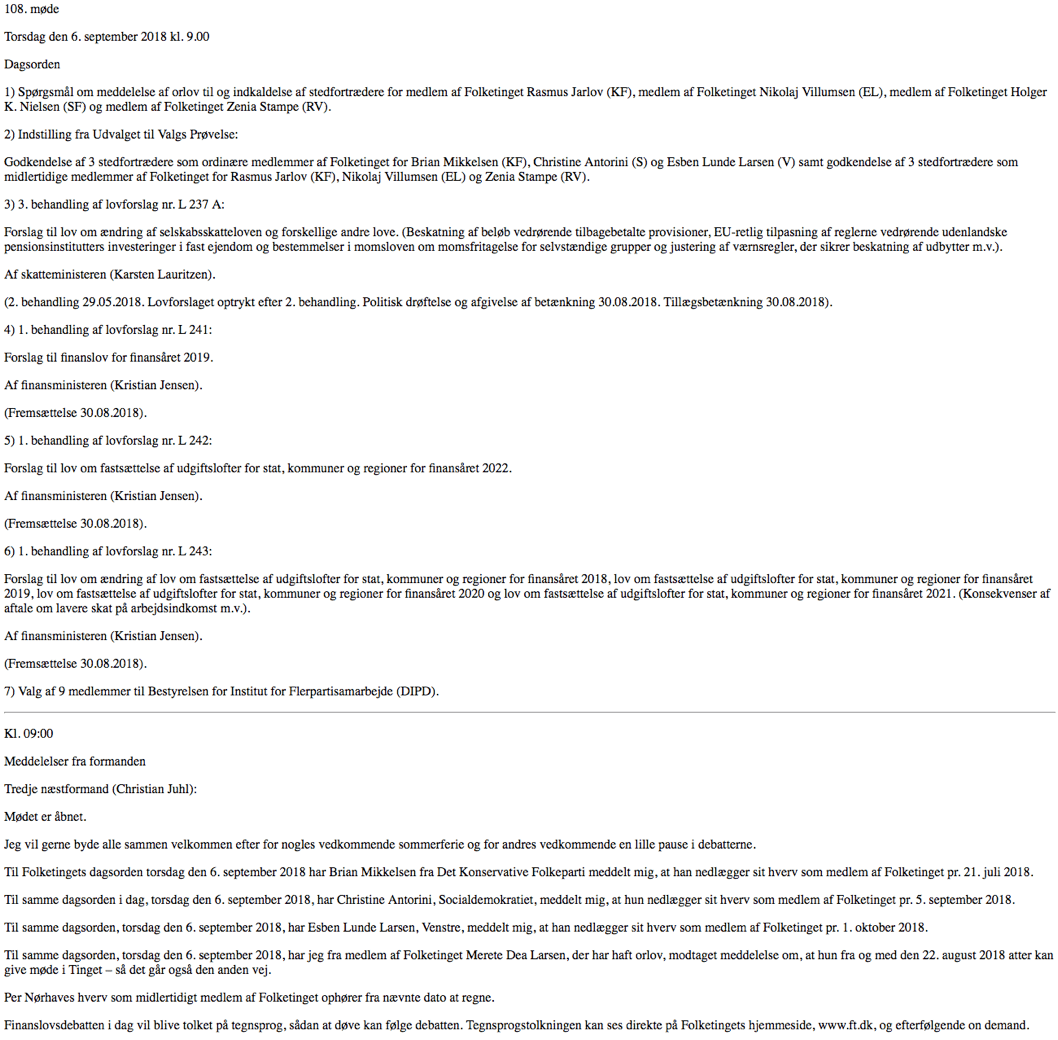
Figure 2. Proceedings of the Danish parliament in HTML.
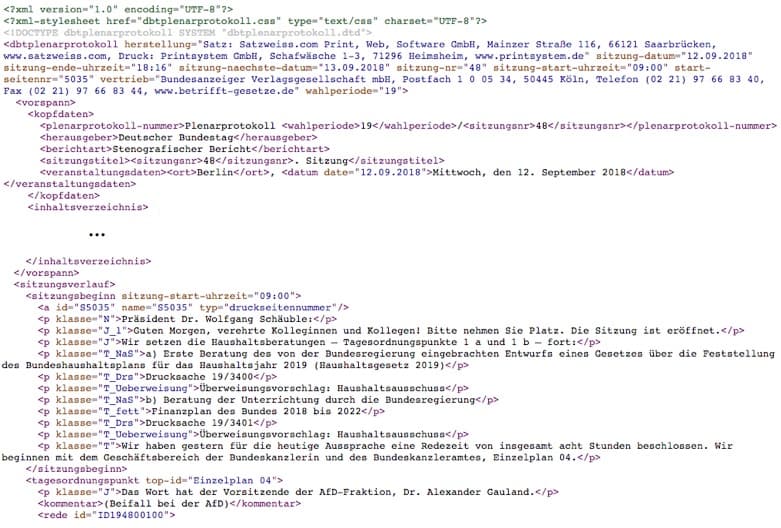
Figure 3. Proceedings of the German parliament in XML.
Structural Elements
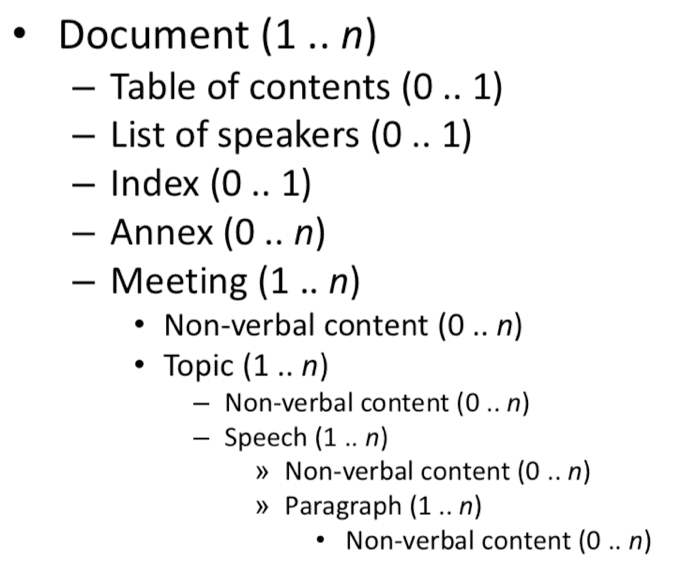
Figure 4. Informally presented structure of Slovenian parliamentary proceedings (with minimal and maximal occurrences of structural elements).
Parliamentary debates are typically published in a uniform format, which fluctuates very little in time. A document typically contains the table of contents, the list of speakers, the index of topics, annexes (session papers, legislation, etc.) and, most importantly, the transcribed speeches, accompanied by non-verbal content, such as information about the meeting and the chairperson, description of the outcome of a vote, description of actions like applause, etc.
Encoding Standards
There are several XML schemas in which parliamentary proceedings can be encoded. The most popular are:
- Political Mashup
- Parliamentary Metadata Language
- Akomo Ntoso schema
- Text Encoding Initiative Guidelines
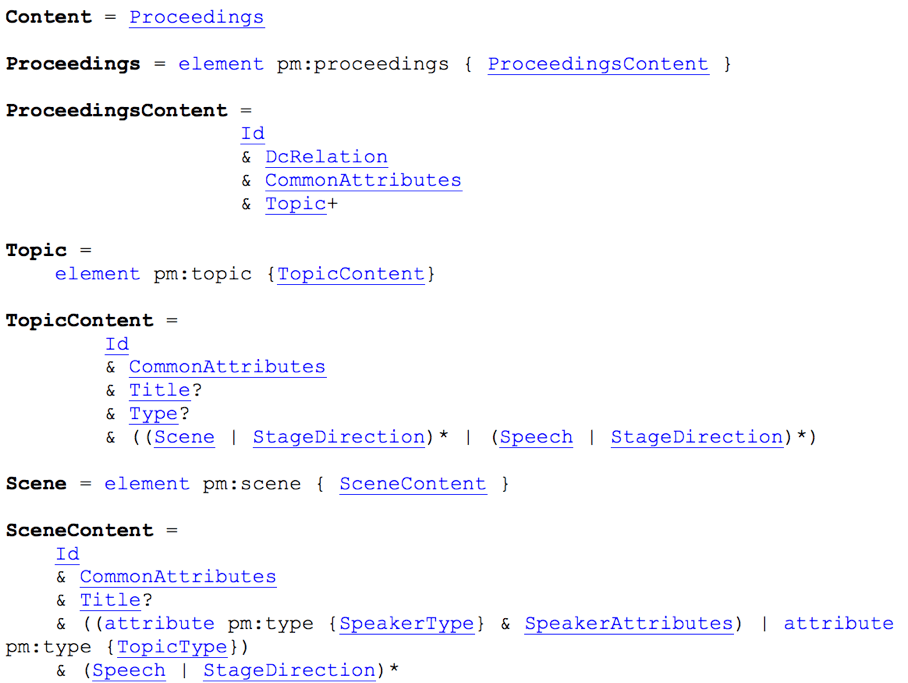
Figure 5. Political Mashup, formal XML schema for parliamentary proceedings.
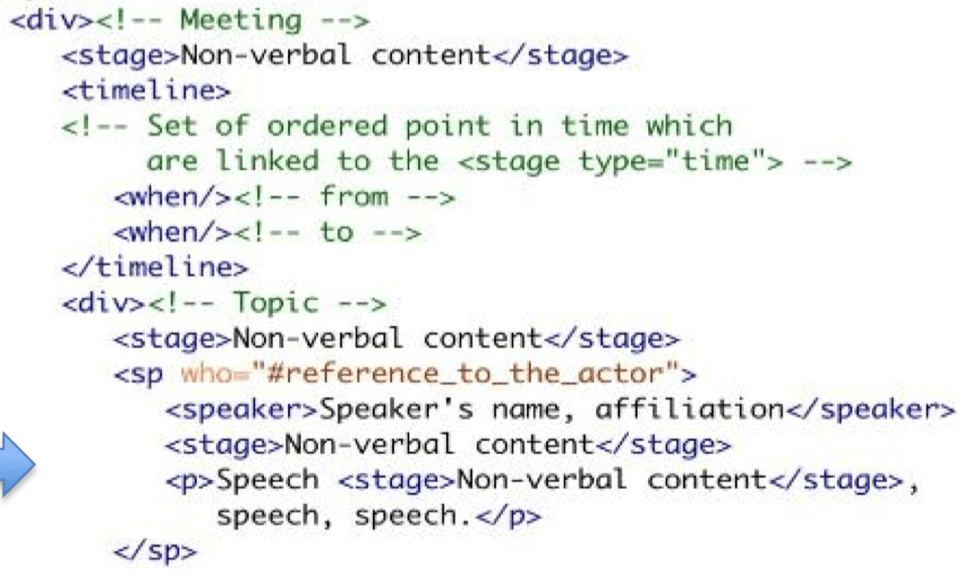
Figure 6. An exemplification of the TEI schema for speech as used for Slovenian parliamentary proceedings.
Metadata
Parliamentary records are rich in extralinguistic markup on the speech level (e.g. parliamentary session, date, meeting item, speaking time) and also on the speaker level (e.g. speaker’s name, date of birth, gender, education, party affiliation). Metadata can be used by researchers as variables in their analysis or for fine-grained filtering of the research data.
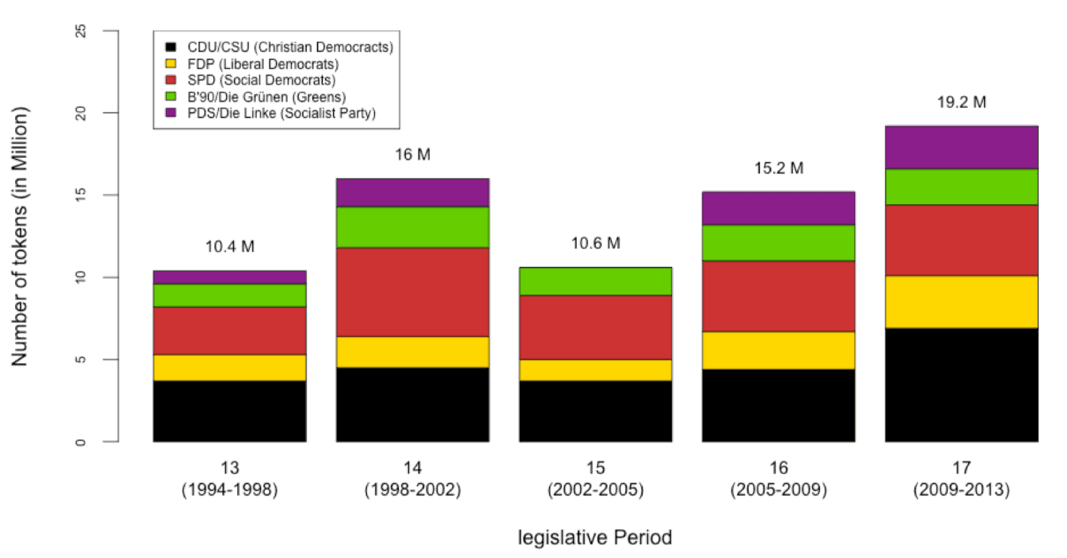
Figure 7. Text production in the German parliament over time by political party.
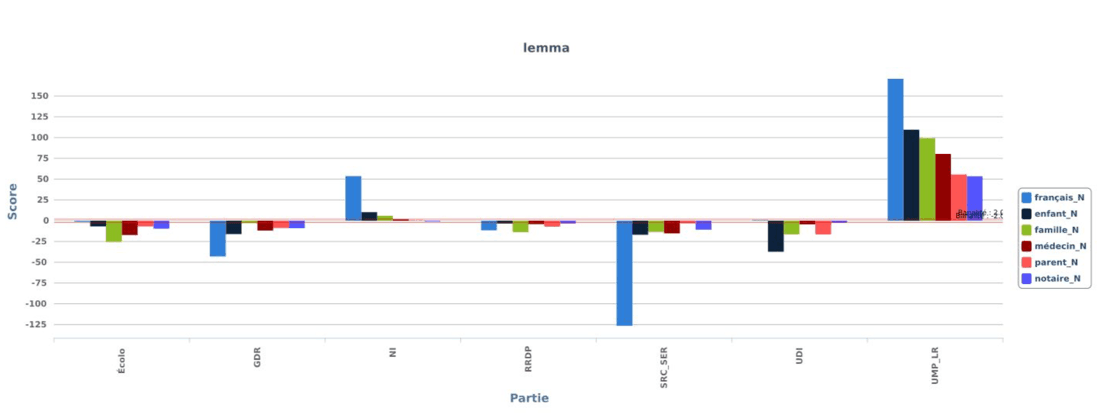
Figure 8. Most characteristic nouns specific to a given parliamentary group in the French parliament.
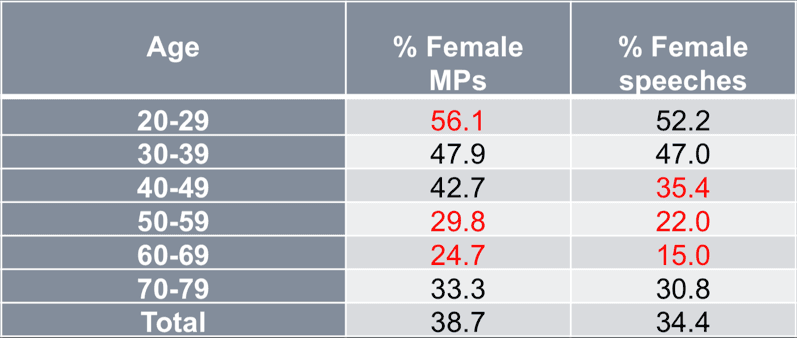
Figure 9. Representation and text production of female members of the Danish parliament.
Linguistic Annotations and Text Enrichment
In addition to the extralinguistic metadata, parliamentary records are typically further enriched with different levels of linguistic annotations. The most standard are tokenization (identifying words and, typically, punctuation marks), sentence segmentation (marking sentence boundaries), morphosyntactic tagging (adding information on the part of speech and other morphosyntactic characteristics of each word token in the corpus) and lemmatization (providing the base dictionary forms of the inflected words).
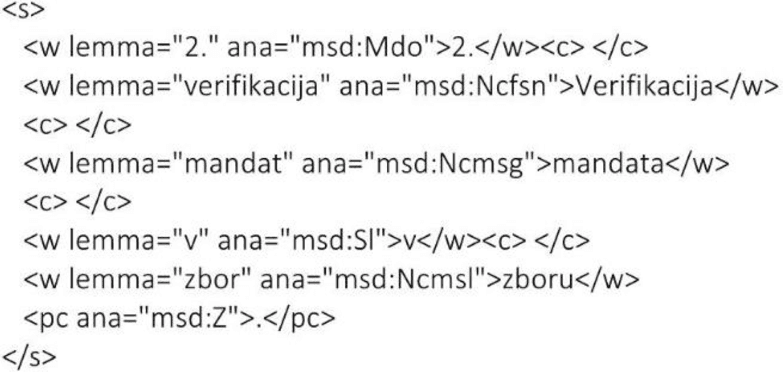
Figure 10. Morphosyntactically tagged and lemmatized Slovenian parliamentary corpus.
To further facilitate the use of parliamentary records, they often also include annotations of named entities (markings of names of persons, organizations and places) and, more recently, sentiment (information on whether a speech conveys a positive, negative or neutral attitude about the subject matter). Other frequent text enrichment procedures for parliamentary data are the annotation of discussion topics and linking with their corresponding Wikipedia pages (e.g. Brexit), and linking of parliamentary debates with external knowledge sources, such as voting records.
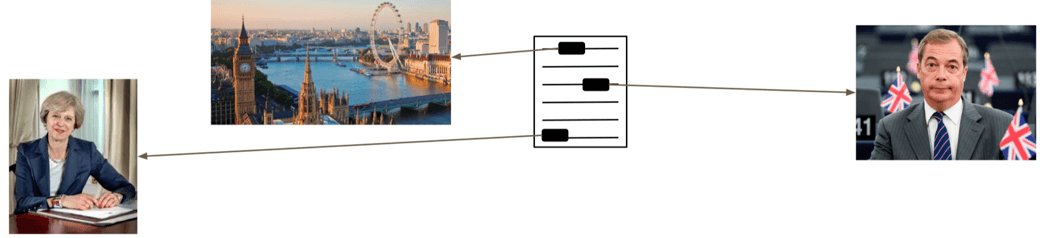
Figure 11. Illustration of the named entity recognition and linking in the UK parliamentary proceedings.

Figure 12. Examples of sentiment annotation (positive in green, negative in red) in the UK parliamentary corpus.
Boosting Digital Humanities Research with Parliamentary Data
The unprecedented availability of large amounts of parliamentary records in digital form has opened up new opportunities for political scientists, sociologists, and historians, who have increasingly started to adopt methodologies previously known in the fields of natural language processing and data science, such as text mining, social network analysis, geospatial analysis, and data visualization, in order to structure, search, mine, manipulate, visualize, share, and combine parliamentary data. These approaches enable scholars to apply the interpretative traditions of the humanities and social sciences to data on a very large scale but also allow them to address new research questions and develop novel techniques for tackling complex social phenomena (e.g. migrant crisis, Euroscepticism, populist movements).

Figure 13. Typical workflow in digital humanities research with parliamentary data.
Case Study 1: The War in Parliament Project
War in Parliament was a successful data curation project that made the proceedings of the Dutch parliament available as a semi-structured corpus compliant with CLARIN standards. The corpus is now accessible through PoliticalMashup, an advanced search engine tailored to historical and social science research. Importantly, the project served as an illustrative case study that clearly showed how a corpus-based approach to the analysis of parliamentary proceedings unveiled certain aspects of the political past that had hitherto remained only as vaguely remembered events in a nation’s collective memory.
Concretely, the authors of War in Parliament wanted to systematically check how the Dutch Boerenpartij (Farmers’ Party) was associated with National Socialism between the years 1958 and 1982. By using complex corpus-based search queries, they were able to determine the following two facts. On the one hand, it was indeed the case that the Boerenpartij was implicitly criticised for their right-wing political stance throughout this entire period. On the other hand, the corpus-based approach showed, for the first time, that they were actually only once directly accused of fostering National Socialist ideas, and this was when Hendrik Adams, a member of the party, was singled out for being a supporter of the German occupier during World War II.
Case Study 2: Gender in the Danish Parliament
The motivation for researching gender issues in the Danish parliament is the fact that active participation of women in politics is historically relatively new, and that women are still underrepresented in the Danish parliament. Hansen et al. (2018) investigated gender differences in the revised transcripts of speeches from the Danish Parliament over a time span of eight years (2009-2017). They investigated the topics addressed, speech frequencies and speech lengths with respect to their duration as well as the number of the speakers, their age, party and role in the party.
Their study shows that the number of female MPs under 29 is larger than the number of male MPs from the same age group and that in general women speak less frequently and for a shorter time than male MPs in proportion to their seats in Parliament. The difference in speaking time between female and male MPs is statistically significant. The data also show that women belonging to left-wing parties speak less frequently than women from right-wing parties compared to their seats in Parliament. The data also indicate that ministers and spokespersons speak more frequently than ordinary MPs and that female ministers under a male prime minister give fewer speeches than female ministers under a female prime minister even though their percentages in the two periods are similar. Their analysis shows that there were relatively more male spokespersons than female ones in the period covered by the corpus. Finally, the Danish data seem to confirm the findings from related studies that female MPs more often spoke about “softer” political areas, while in the speeches of male MPs “harder” subjects prevailed.
Case Study 3: The Linked Open Data of Talk of Europe
Talk of Europe was a successful project that used the multilingual proceedings of the European Parliament debates to create a highly interactive and structured parliamentary corpus that could accommodate a wide range of research approaches.
The Talk of Europe proceedings are enriched with Linked Open Data, which means that the debates are dynamically linked to other Open Data datasets freely available on the Internet, such as a general-purpose encyclopaedia that provides information about the Members of Parliament and a geographical knowledge base for European countries. The corpus that resulted from this project is available through an online search interface that requires users to input the search parameters in the SPARQL query language. Since SPARQL allows a researcher to search for fairly complex notions, the Talk of Europe dataset is ideal for tackling various research questions where the gap between qualitative and quantitative approaches to parliamentary analysis needs to be bridged.
Watch the video on Talk of Europe (link takes you to an external site)
For instance, Kessels et al. (2014) used network analysis to explore highly complex constellations of relations between members of the EU parliament based on their interactions in plenary debates. They transformed the text into a social graph representing the political debates, including the networks, connections and affiliations of the participants. Birckholz et al. (2015) used the dataset and the power of the SPARQL query language to study how Members of Parliament often suggest higher education as a solution to unrelated policy problems. Mandravickaite et al. (2015) applies stylometric analysis to the speeches of the EU members of parliament to uncover how the rhetoric of the members of the EP is similar or different to the rhetoric of the party groups they belong to and to that of the other party groups.
Watch Interviews with Researchers!
Interview with Federico Nanni (University of Mannheim) about researching parliamentary collections (approx. 6 minutes):
Interview with Prof. Dr. Andreas Blätte of the University of Duisburg-Essen (UDE) about working with Parliamentary Data (approx. 5 minutes):
Parliamentary Corpora in CLARIN Resource Families
CLARIN Resource Families
CLARIN for Researchers is an on-line collection of training materials, case studies and expert contacts from the entire CLARIN network, aimed at researchers and students of all stages who are working in the fields of Digital Humanities and Social Sciences and are interested in analysing language data and using text processing tools that are available in the CLARIN infrastructure.

Figure 14 - Infographic of the Parliamentary Corpora from the CLARIN Resource Families.
The Parliamentary Corpora
The CLARIN infrastructure offers access to 18 parliamentary corpora, covering 15 national parliaments and 14 languages, as well as the corpus of the European parliament proceedings, which is available in 21 languages. In the vast majority of cases, the corpora can be directly downloaded from the national repositories or queried through easy-to-use online search environments. They are also richly tagged and mostly available under open licences.
An overview of the existing parliamentary corpora is available at https://www.clarin.eu/resource-families/parliamentary-corpora
Using Parliamentary Corpora in CLARIN
In this section, we will show how parliamentary corpora can be queried through on line concordancers. As an illustrative example we will use the corpus of the British parliament, called the Hansard corpus. This is the largest parliamentary corpus in the CLARIN Resource Families both in that it covers the longest time period (i.e., the entire 19th and 20th centuries, and a few years in the 2000s) and contains the largest number of proceedings – approximately 7.6 million speeches made by around 40,000 different speakers, which amounts to 1.6 billion tokens. The Hansard corpus is available through the CoCA concordance but other corpora and concordancers are built according to similar principles and can be used in similar ways. We will demonstrate the basic types of corpus queries.
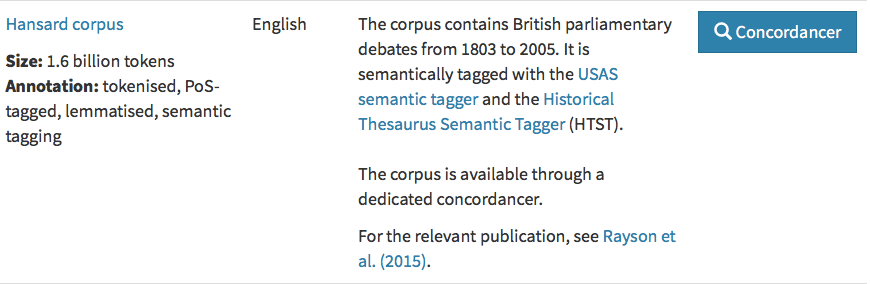
Figure 15. Description of the Hansard corpus in the CLARIN resource families with hyperlinks to the concordance, tools used to annotate the corpus and the key publication about how the corpus was built.
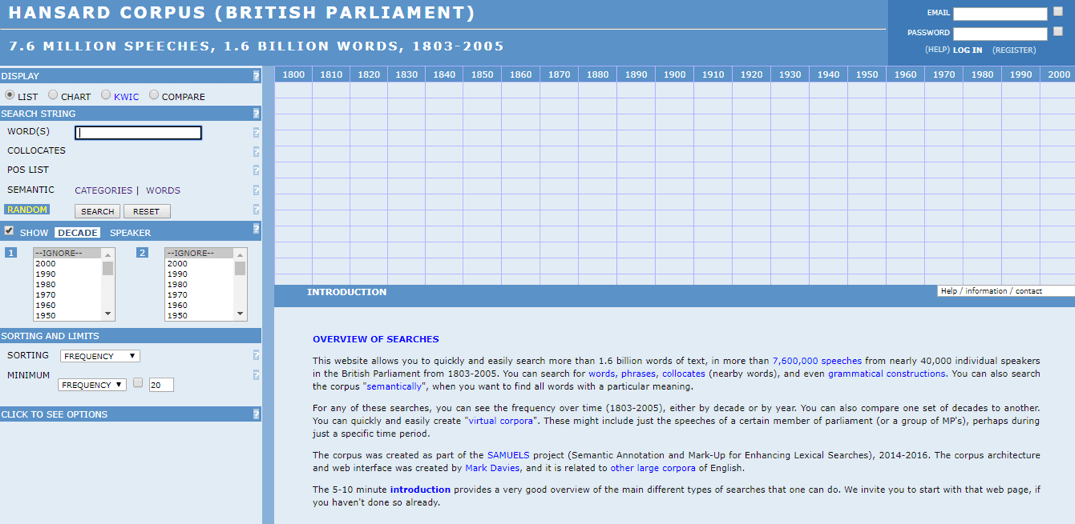
Figure 16. The concordancer for the Hansard corpus.
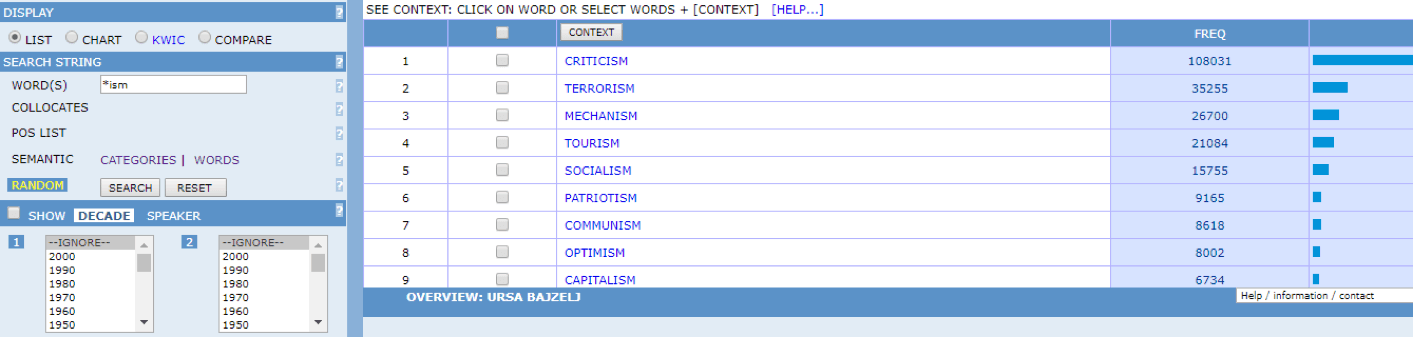
Figure 17. Frequency list for *ism.
Since Hansard is a large diachronic corpus, it is especially suitable for researching how the usage of specific words changed through time in the context of the British parliament. As can be seen in Figure 17, the second most frequent word is terrorism. Let’s say that we want to investigate this word diachronically, using the chart option which sorts all the occurrences of the word either by decade (the default option) or speaker. The chart in Figure 18 shows that the word terrorism has been used in the British parliament since the first half of the 19th century, although it was very infrequent then (for instance, there were 7 uses of the word in the 1850s). The frequency of the word rose dramatically in the 1970s (4846 times compared to 363 instances in the 1960s).

Figure 18. Diachronic chart for terrorism.
Clicking on one of the columns displays the concordances, which show how the word was used in context. Figure 19 shows the first 12 results for the 1970s.
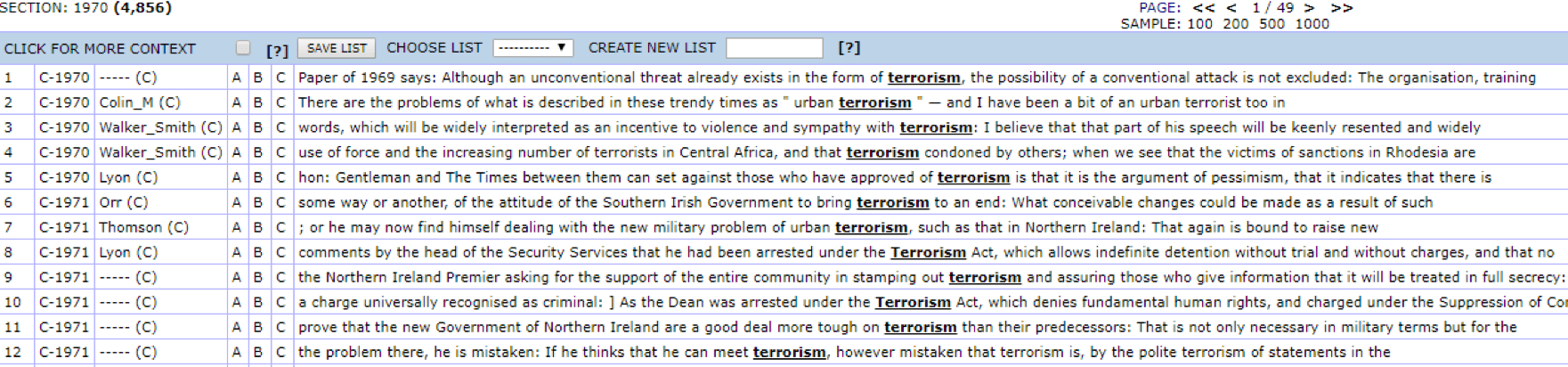
Figure 19. Concordances for terrorism.
Each line is an excerpt of a speech delivered in the British parliament in which the word terrorism was used. The metadata for this entry can be displayed by clicking the MORE CONTEXT tab. Figure 20 shows the metadata for concordance line 6: Orr (C), and allows us to see a substantially more expanded context for the example, including information on the speaker (Mr_Lawrence_Orr), the date (1971_02_15), and the topic of the debate (northern_ireland_hansard_15_february_1971_).
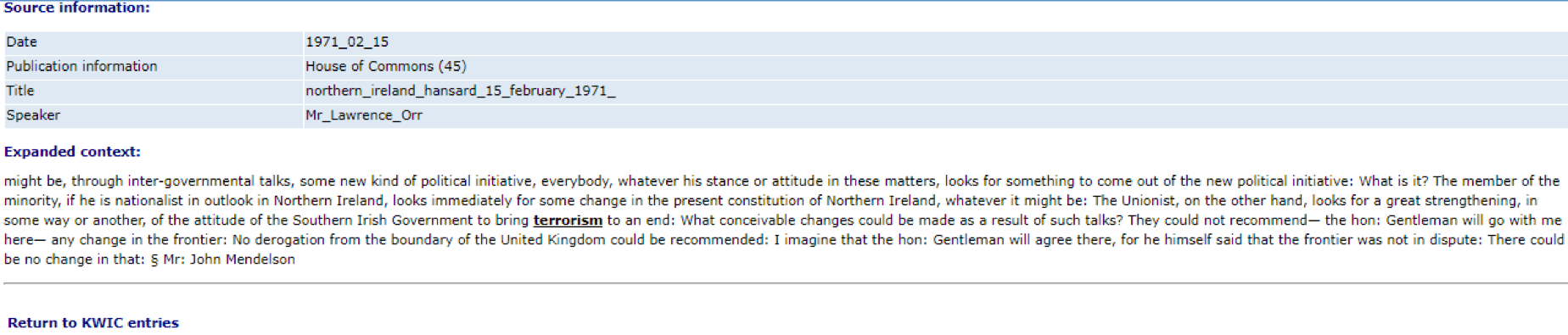
Figure 20. Metadata for one of the concordance lines in the corpus.
Further Learning and Image Credits for the ‘Collections of Parliamentary records’ section
Click to Expand
Further Learning
-
- Benardou, A., Dunning, A., Schaller, M., and Chatzidiakou, N. (2015). Research Themes for Aggregating Digital Content: Parliamentary Papers in Europe. Europeana Cloud – Work Package 1. Link to PDF: https://pro.europeana.eu/files/Europeana_Professional/Projects/Project_list/Europeana_Cloud/Deliverables/D1.3%20D1.6%20User%20Requirements%20Analysis%20and%20Case%20Studies%20Report%20Content%20Strategy%20Report.pdf
- Gartner, R. (2014). A metadata infrastructure for the analysis of parliamentary proceedings. In Big Humanities Data, The Second IEEE Big Data 2014 Workshop. Bethesda, Maryland, USA. Link to publisher’s website: https://doi.org/10.1109/BigData.2014.7004452
- Hughes, L. M., Ell, P. S., Knight, G. A., and Dobreva, M. (2013). Assessing and measuring impact of a digital collection in the humanities: An analysis of the SPHERE (Stormont Parliamentary Hansards: Embedded in Research and Education) Project. Digital Scholarship in the Humanities, 30(2): 183-198.
- Pasi Ihalainen, Cornelia Ilie, and Kari Palonen (eds.) 2016. Parliaments and Parliamentarism. A comparative History of a European Concept. Berghan Books. Link to publisher’s website: https://www.berghahnbooks.com/title/IhalainenParliament
- Cornelia Ilie (ed.) 2010. European Parliaments under Scrutiny. Discourse Strategies and Interaction Practices. John Benjamins Publishing Company. Link to publisher’s website: https://benjamins.com/catalog/dapsac.38
- Marx, M. (2009). Long, often quite boring, notes of meetings. In ESAIR ‘09 Proceedings of the WSDM ‘09 Workshop on Exploiting Semantic Annotations in Information Retrieval, pp. 46-53. Barcelona, Spain. Link to PDF: http://citeseerx.ist.psu.edu/viewdoc/download?doi=10.1.1.169.1785&rep=rep1&type=pdf
- Pančur, A., Šorn, M., and Erjavec, T. (2018) SlovParl 2.0: The Collection of Slovene Parliamentary Debates from the Period of Secession. Proceedings of the Eleventh International Conference on Language Resources and Evaluation (LREC 2018), ParlaCLARIN Workshop, pp. 8-15. Miyazaki, Japan. Link to PDF: http://lrec-conf.org/workshops/lrec2018/W2/pdf/book_of_proceedings.pdf
- Piersma, Hinke, Ismee Tames, Lars Buitinck, Johan van Doornik and Maarten Marx (2014). War in Parliament: What a Digital Approach Can Add to the Study of Parliamentary History. Digital Humanities Quarterly 8(1). Link to full text: http://www.digitalhumanities.org/dhq/vol/8/1/000176/000176.html
- Robertson, S. (2016). The Differences between Digital Humanities and Digital History. In: Debates in Digital Humanities 2016. Minneapolis and London: University of Minnesota Press. Link to full text: http://dhdebates.gc.cuny.edu/debates/text/76
- Spiro, L. (2014). Access, Explore, Converse: The Impact (and Potential Impact) of the Digital Humanities on Scholarship. In: Keys for architectural history research in the digital era. Link to full text: https://inha.revues.org/4925
- van Aggelen, Astrid, Laura Hollink, Max Kemman, Martijn Kleppe and Hendri Beunders (2017). The debates of the European Parliament as Linked Open Data. Semantic Web 8: 271–281. Link to full text: http://doi.org/10.3233/SW-160227
Video Workshops:
- CLARIN-PLUS Workshop “Working with Parliamentary Records”, Sofia 2017. http://videolectures.net/clarinplusworkshop2017_sofia/?q=clarin
- ParlaCLARIN Workshop: Creating and Using Parliamentary Corpora, Miyazaki 2018. http://videolectures.net/parlaCLARIN2018_miyazaki/?q=clarin
Other resources:
- Brief tour through CoCA: https://corpus.byu.edu/coca/help/whereStart.asp
- Quick start guide for SketchEngine: https://www.sketchengine.eu/quick-start-guide/
- User manual for Kontext: https://wiki.korpus.cz/doku.php/en:manualy:kontext:index
Image Credits
- Figure 1 is taken from the website of the Austrian parliament: Stenographic protocol of November 20, 1952 and Stenographic protocol of April 19, 2016.
- Figure 2 is taken from the website of the Danish parliament: Protocol of September 6, 2018.
- Figure 3 is taken from the website of the German parliament.
- Figure 4 is taken from Pančur et al. (2018). In: Proceedings of the Eleventh International Conference on Language Resources and Evaluation (LREC 2018), ParlaCLARIN Workshop [link to PDF], Section 2.2, page 9.
- Figure 5 is taken from Political Mashup.
- Figure 6 is taken from the presentation by Pančur et al. (2018), slide 7.
- Figure 7 is taken from the presentation by Blätte (2018), slide 3.
- Figure 8 is taken from Diwersy et al. (2018). In: Proceedings of the Eleventh International Conference on Language Resources and Evaluation (LREC 2018), ParlaCLARIN Workshop [link to PDF], Figure 2, page 76.
- Figure 9 is taken from Hansen et al. (2018). In: Proceedings of the Eleventh International Conference on Language Resources and Evaluation (LREC 2018), ParlaCLARIN Workshop [link to PDF], Table 5, page 69.
- Figure 10 is taken from Pančur et al. (2018). In: Proceedings of the Eleventh International Conference on Language Resources and Evaluation (LREC 2018), ParlaCLARIN Workshop [link to PDF], Figure 1 page 10.
- Figure 11 is taken from the presentation by Nanni et al. (2018), slide 16.
- Figure 12 is taken from several slides of the presentation by Abercrombie et al. (2018).
- Figure 13 is taken from the presentation by Gkoumas et al. (2018), slide 4.
- Figure 14 is taken from Clarin.eu: Parliamentary corpora.
- Figures 15-20 are screenshots from the Hansard corpus in the CoCa concordancer.